|
|
|
|
 |
|
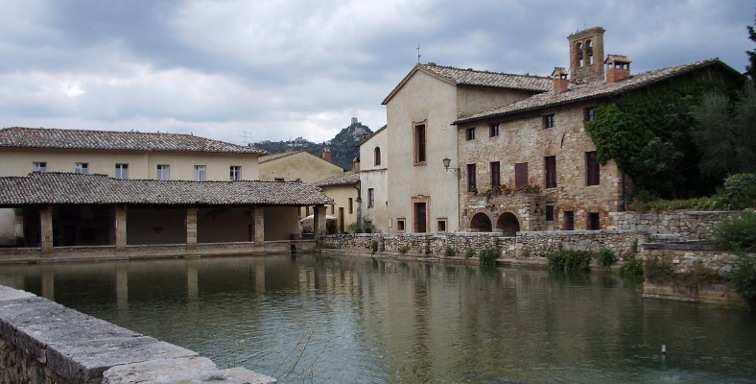
Bagno Vignoni è un piccolissimo borgo nel quale, al posto della piazza centrale, già gli antichi romani avevano ricavato una grande piscina di acqua termale che ancora oggi è lì a fare bella mostra di sé e a sedurre i visitatori. È la "Piazza delle sorgenti", una vasca rettangolare, ricostruita nel cinquecento, che contiene una sorgente di acqua termale calda e fumante che esce dalla falda sotterranea di origini vulcaniche. Fin dall'epoca degli etruschi e poi dei romani - come testimoniano i numerosi reperti archeologici - le terme di Bagno Vignoni sono state frequentate da illustri personaggi, come Papa Pio II, Santa Caterina da Siena, Lorenzo il Magnifico e tanti altri artisti che avevano eletto il borgo come sede di villeggiatura. |
Bagno Vignoni is a very little village where, in the place of a central square, the ancient Romans made a big swimming pool with thermal water. Today the swimming pool is still here to show itself off and seduce the visitors. Since the Etruscans and Romans - as evidenced by the numerous archaeological finds - the spa of Bagno Vignoni was attended by eminent personalities such as Pope Pius II, Santa Caterina da Siena, Lorenzo the Magnificent and many other artists who had elected the village as main holiday resort. Characteristic of Bagno Vignoni, besides the thermal waters, are its structure, despite numerous incidents of war, devastation and fires that involved the Val d'Orcia in the Middle Ages, remains essentially unchanged since then. |
 |
|
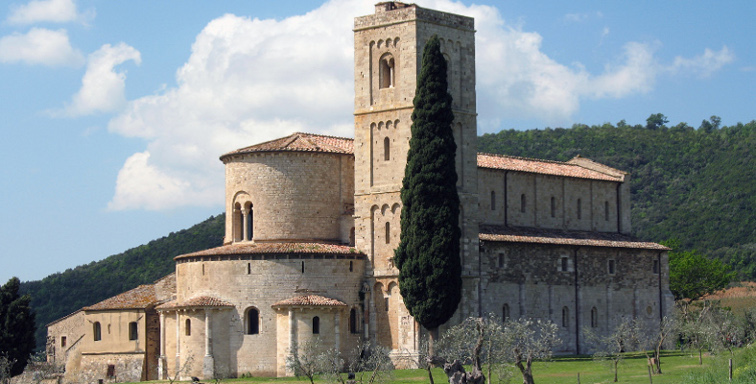
Montalcino. Chi non ha mai sentito parlare del Brunello di Montalcino dovrebbe andare in questo piccolo paese arroccato sulla cima di una meravigliosa collina a provarlo. Chi già conosce questo splendido e famosissimo vino potrà visitare i luoghi di produzione e magari far visita a qualche cantina che ospita e offre degustazioni. La collina su cui si trova Montalcino è stata abitata probabilmente già in epoca etrusca. Montalcino è menzionato per la prima volta in un documento del 29 dicembre 814, quando l'imperatore Ludovico il Pio concesse Il territorio - Surroundings sub monte Lucini all’abate della vicina Abbazia di Sant'Antimo. |
Montalcino. Those who have never heard about the Brunello di Montalcino should go to this little fortified village on top of a wonderful hill and try it. Those who have already been in touch with this very famous wine can visit its place of production and, maybe, pay a visit to some of the cellars that host and offer wine tastings. The town takes its name from a variety of oak tree that once covered the terrain. The very high site of the town offers stunning views over the Asso, Ombrone and Arbia valleys of Tuscany, dotted with silvery olive orchards, vineyards, fields and villages. The lower slopes of the Montalcino hill itself are dominated by highly productive vines and olive orchards. |
 |
|
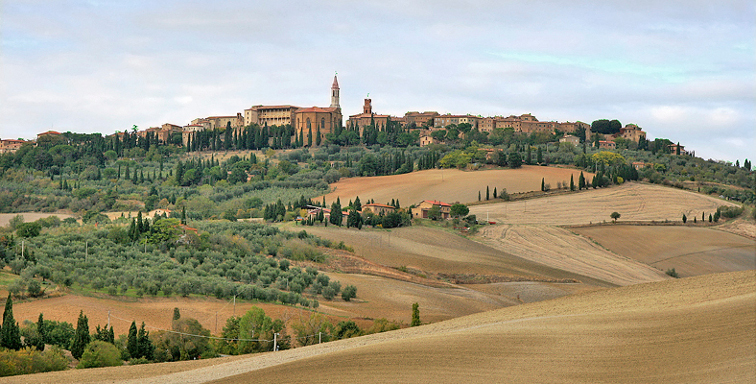
Pienza è un altro villaggio caratteristico, comodamente seduto su una delle colline che dominano la val d’Orcia. Luogo affascinante e romantico, è ben noto ai buongustai per la produzione del suo famoso formaggio pecorino che, una volta provato, non sarà facile da dimenticare. A Pienza si trovano scorci, angoli nascosti e piccole viuzze in grado di sorprendere anche i viaggiatori più smaliziati. Il centro storico è stato dichiarato dall'UNESCO patrimonio dell'umanità nel 1996. La città altro non era che un piccolo borgo fino al 1462, conosciuto col nome di Corsignano. L'evento che cambiò le sorti di Pienza fu la nascita nel 1405 di Enea Silvio Piccolomini che 53 anni dopo divenne Papa Pio II. Proprio un viaggio del pontefice verso Mantova lo portò ad attraversare il luogo di nascita e il degrado che trovò lo portò a decidere la costruzione sopra l'antico borgo, affidandone il progetto all'architetto Bernardo Rossellino: costruzione che durò circa quattro anni e portò alla luce una cittadina armoniosa e con forme tipicamente quattrocentesche. La morte prematura di papa Pio II chiuse anche la storia del comune che da allora è rimasta pressoché invariata. |
Pienza, another peculiar, culturally infused village is comfortably sat on one of the hills that overlook Val d’Orcia. It is a fascinating, romantic spot and it well known by gourmets for its famous pecorino cheese. Once you have tried it, you will never forget it. In Pienza you will find views, hidden corners and small alleys that will surprise the most cunning of the travelers. In 1996, UNESCO declared the town a World Heritage Site, and in 2004 the entire valley, the Val d'Orcia, was included on the list of UNESCO’s World Cultural Landscapes. Pienza was rebuilt from a village called Corsignano, which was the birthplace (1405) of Aeneas Silvius Piccolomini (Italian: Enea Silvio Piccolomini), a Renaissance humanist born into an exiled Sienese family, who later became Pope Pius II. Once he became Pope, Piccolomini had the entire village rebuilt as an ideal Renaissance town. Intended as a retreat from Rome, it represents the first application of humanist urban planning concepts, creating an impetus for planning that was adopted in other Italian towns and cities and eventually spread to other European centers. |
 |
|
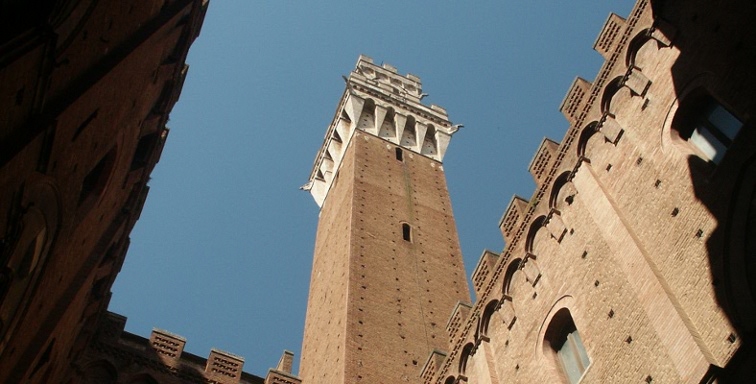
La città di Siena, che non ha certo bisogno di presentazioni, è raggiungibile con circa un’ora di viaggio in auto. Una volta lì, perché non gustarsi un buon bicchiere di rosso seduti comodamente nella Piazza del Campo, oppure passeggiare semplicemente in città ed ammirarne i capolavori artistici che l’hanno fatta grande? Il due luglio e il sedici agosto Siena si trasforma e diventa la sede del Palio, la corsa di cavalli più famosa d’Italia. Se siete nei dintorni, non perdete l’occasione di godervi questo spettacolo. |
The town of Siena, which does not need a letter of introduction, is at about one hour driving. Once you are there, why not having a good glass of wine as you sit in the Campo square or taking a stroll around the centre of town to admire the art masterpieces that made Siena great? On the 2nd July and on the 16th August Siena transforms itself and becomes the town of the Palio, the most famous Italian horse race. If you are in the surroundings, do not miss the chance to enjoy the show. |